15 Worldbuilding Tips for Fantasy Worlds That Feel Real
Connect the land, the trade, the magic, and the people, then put each connection where the players will run into it
November 22, 2026
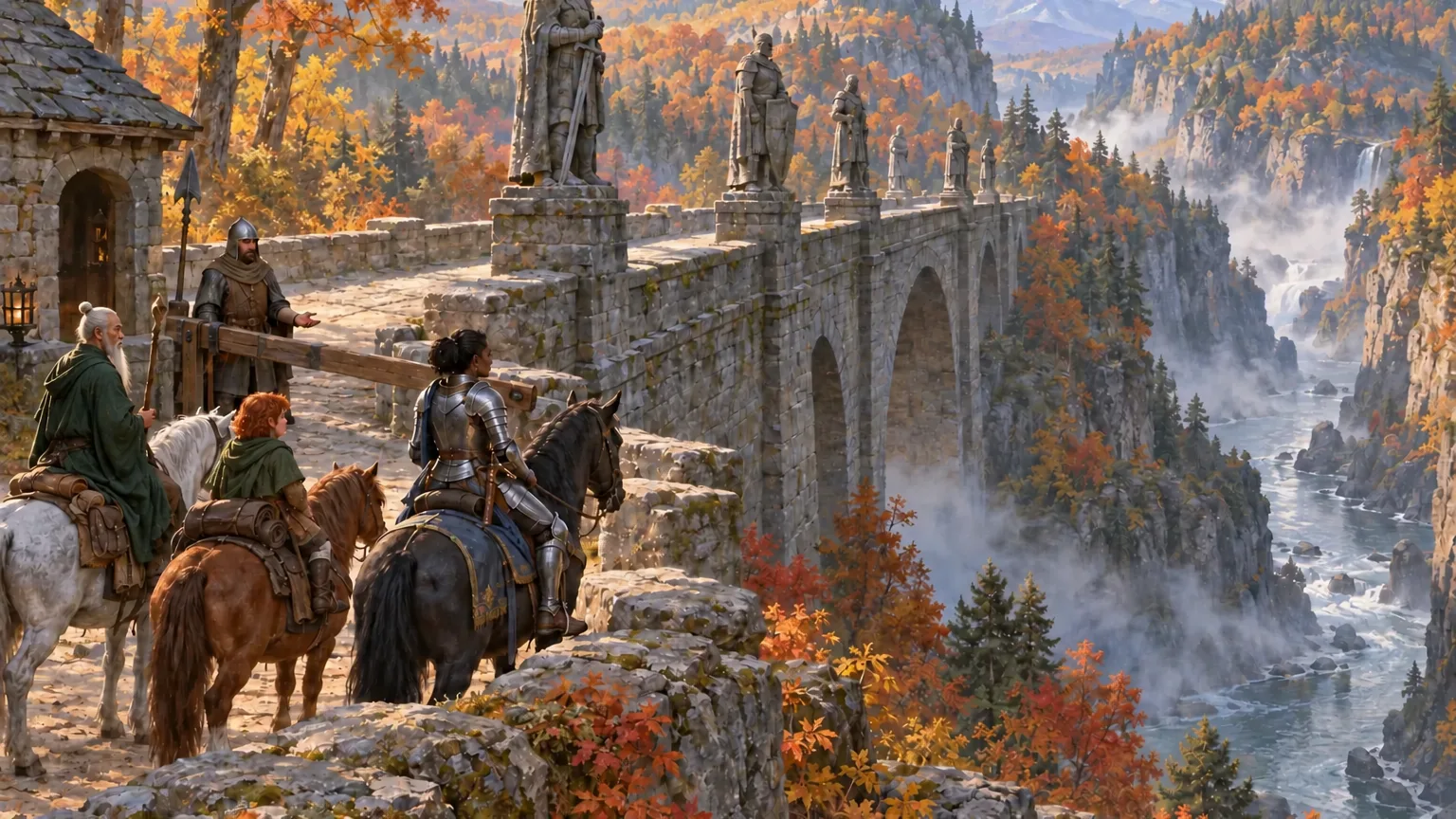
A fantasy world feels real when its parts depend on each other, and your players feel it when they run into those parts in play. The river decides where the city is, the city's trade decides who holds power, and power decides what a farmer can do when the steward comes for her land. For a GM, the second half matters as much as the first: a connection only counts once the players pay a price, hear a rumor, or find a road closed because of it.
Plenty of GMs build their own worlds. In a September 2023 poll of 3,100 D&D GMs, Sly Flourish found that 47% typically run games in a personal homebrew setting. Plenty of them also know the moment the Alexandrian describes in Getting the Players to Care: hours spent "carefully detailing some piece of lore or a particularly intricate conspiracy… only to discover that their players didn't really care." On EN World, a thread titled Players Don't Care About Your Setting opens with "It pains me to say this, but I don't think most players care about game settings all that much."
The 15 worldbuilding tips below cover the usual ground (land, history, trade, magic, gods, culture, monsters), and each one is worked through on the same small region: Bishop's Lenn, a river trade city, and Wythe Fen, the marsh upriver. Each example includes what the players actually run into. Treat the 15 as questions to ask about the place the party is standing in, not a list to finish before the first session.
How does worldbuilding reach the players?
Through what they can see, use, and get in trouble with. The Alexandrian's rule is that "Details which the PCs can never learn of or interact with aren't worth wasting time on," and he adds that "Players are more likely to remember things that they have done than things that they are told." The Angry GM makes the same point about establishing a setting without exposition: writers say "show, don't tell," but "in an RPG, it's even better to 'do, don't show.'"
So for every piece of the world, decide where it surfaces. A war 300 years ago surfaces as a toll the party has to pay at a bridge the victors built. A guild rivalry surfaces as two smiths who won't sell to anyone seen with the other. Most of the examples in this guide surface in one of five ways:
- as a price the party pays
- as a custom or rule that gets in their way
- as a person who wants something from them
- as a rumor, usually late and half wrong
- as something in plain sight that's out of place
Rumors carry a lot of it. In his post on rumor tables, the Alexandrian says players need to learn about a region so they can "set specific goals, ask specific questions, and plan their expeditions."
How much to build before the first session is its own question, and the answer is less than you'd think. The guide to using an AI world builder covers it, along with keeping a list of what's been said at the table.
How do you build a believable foundation for a fantasy world?
Start with what everything else depends on: the land and weather, the history that still shows, the resources, and the rules of magic. Culture, politics, and conflict follow from those four.
1. Let geography and climate decide where people live
Settlements grow where survival is easiest: river crossings, sheltered harbors, fertile valleys, high ground that's easy to defend. Mountains slow armies and trade, rivers carry goods cheaply, and the weather decides what grows. Each kind of country also gives people something to fight over.
| Environment | How people live | What they fight over |
|---|---|---|
| River delta | Barges, fishing, tolls on trade | Wharf rights and crossings |
| Mountain pass | Herding, mining, tolls | Who holds the pass |
| Marsh | Reed-cutting, eel fishing, travel by punt | Drainage and land titles |
| Dry steppe | Horses, herds, seasonal camps | Water and grazing rights |
Bishop's Lenn sits near the mouth of a river that drains the fens, so grain comes down by barge and goes out to foreign ports. That one fact explains the city's wealth and its wharves. It's also why every merchant house wants a hand on the quay, and why the party can't tie up so much as a rowboat in Lenn without paying one house or another for the mooring.
2. Leave history where the players can trip over it
History earns its place when its consequences are still around. Sly Flourish, writing up a talk by Kobold Press's Wolfgang Baur, puts it bluntly: "The five thousand years of history may be important to you but you can't expect your players to care until it matters to their characters." A war that moved a border, a migration that brought a new language, or a fallen empire's roads give characters something to stand on, argue about, or inherit.
Wythe Fen keeps an old bargain with the marsh, and the players' first sight of it is a church bell with no rope. Every spring at the equinox, one villager walks into the fen and doesn't come back, and the bell rings for them. Last spring the lord's survey crew arrived the week before, so the village cut the rope to keep the walk quiet. Nobody remembers who made the deal.
3. Build the economy on what each place has and lacks
Decide what each community produces, what it's short of, and what it trades to cover the gap. For Bishop's Lenn:
- It produces grain from the fens and ships from the Parmenter yards.
- It lacks timber and iron, which come in by sea, so the shipyards depend on foreign ports staying friendly.
- It sells credit and cargo insurance, through House Wesenham.
The players meet the economy as prices. Nails cost more in Lenn than they should, and a ship's carpenter will pay well for anyone who can find timber that didn't come through the customs house. Follow one resource far enough and you find a conflict. Draining the fen would give the lord new farmland, and it would end the eel and reed trade that House Wesenham buys from the village.
4. Set limits on magic that the players can plan around
Brandon Sanderson's first law of magic is about fiction: "An author's ability to solve conflict with magic is DIRECTLY PROPORTIONAL to how well the reader understands said magic." At a table, the players are the ones solving problems with magic, so the magic they use needs rules they can know and plan around. Magic the world uses against them can stay as strange as you like.
His second law is "Limitations > Powers," and he applies it to whole worlds: "The costs of living in a harsh world are more interesting, often, than the benefits." Answer four questions before magic shows up in play:
- What can it do, and what can it never do?
- What does it cost: time, money, health, or something stranger?
- Who has access, and who controls that access?
- What has it changed about medicine, travel, war, messages, and work?
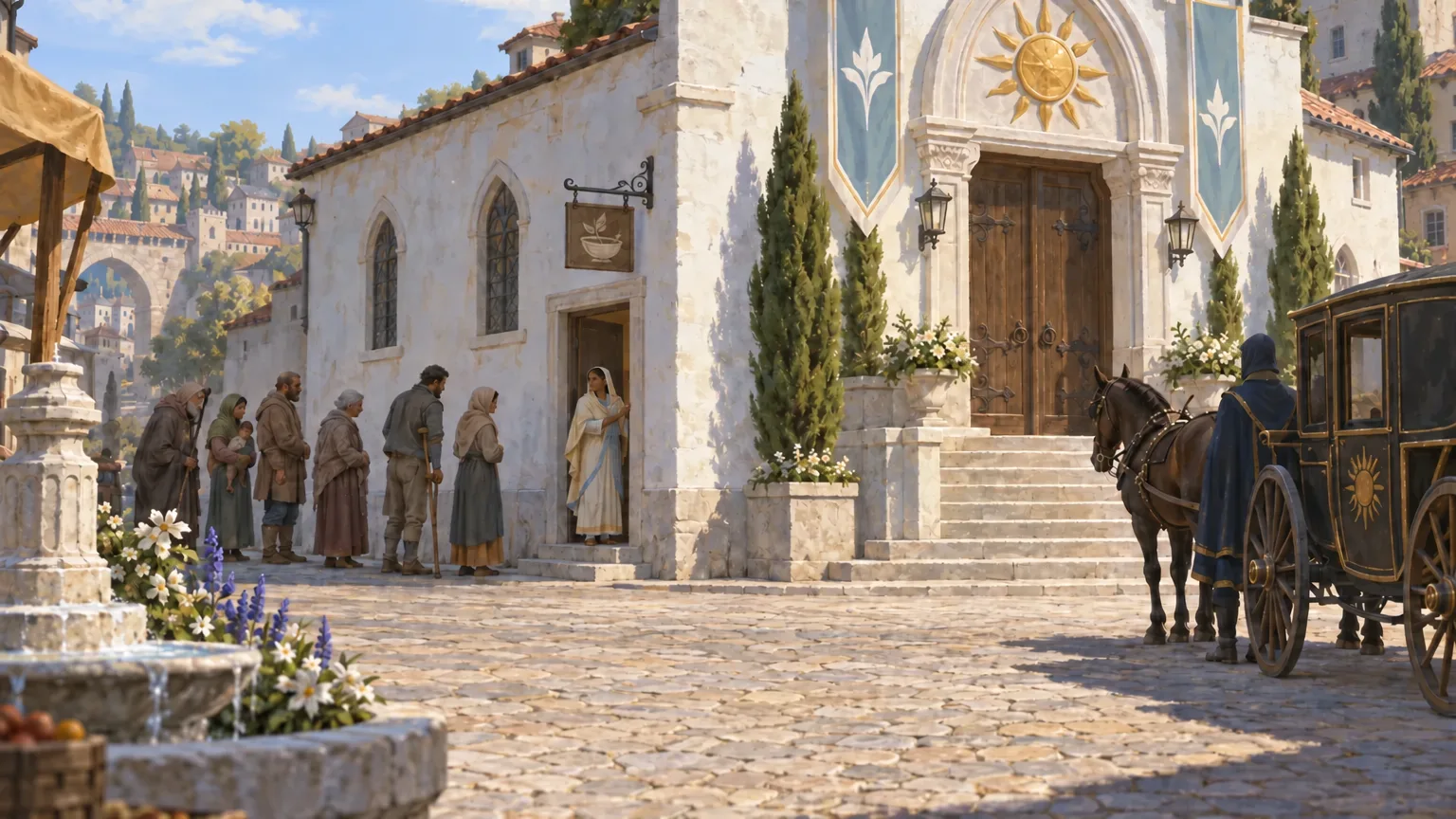
Say healers in Lenn can close any wound, for a fee. Then the poor still die of infection while the rich rarely do, and the players see the difference every morning in the queue at the healers' side door, while carriages stop at the front. A rule like that also decides what a temple's charity is worth, and what a thief will risk for a purse.
How do you make cultures and societies feel lived-in?
By looking at the people who live on the land, starting with the most ordinary ones. The party spends far more time with dockhands and innkeepers than with kings.
5. Decide how ordinary people get through the day
Ask how ordinary people earn a living, get food, raise families, and react when danger comes. Practical details do most of the work: what houses are built from, which trades fill a street, where the market sits, and who puts out fires. The Angry GM has a rule for describing any of it: "Never describe anything in general without adding something specific."
In Lenn, barge families live aboard their boats, eat what the river gives them, and send their children to the quay to haul rope as soon as they can carry it, which makes a ten-year-old on the quay the best person in the city to ask which boat came in last night.
6. Tie every custom to a reason
The barge folk of Lenn name every child after a dead relative, so the same names come round every generation, and a party asking the quay for Merro will be pointed at three of them. The town's clerks can't tell one Merro from another either. It suits a people who live on the move and care more about kin than paperwork, and the barge folk find the confusion useful.
A custom feels real when you can say where it came from, even if the people keeping it can't. Work out the rituals for birth, coming of age, marriage, death, hospitality, and the seasons, and tie each one to the land, the history, or a belief.
7. Decide what the gods ask of ordinary people
A list of gods and their domains tells the players very little. What they run into is practice: the day the market shuts, what an oath is sworn on, who can be buried where, and what a blessing costs. The Alexandrian asks of his own setting, "How, specifically, do Imperial priests say their prayers?" and preps only the rituals the PCs will take part in or care about.
For the gods themselves, start with the ones your players' characters serve, since a cleric's player needs one before the first session. In his post on spiral campaign building, Sly Flourish says you don't need every god in the pantheon, "just those tied to the characters or to their enemies. Fill out the rest as the characters go on their adventures."
No barge leaves the Lenn quay on a feast day, so a party in a hurry finds the river empty and every skipper in the dockside chapel. Upriver, the Wythe Fen church rang its bell for the walker every spring until the rope was cut, for a bargain no priest in the city would bless, and nobody in the village saw a contradiction.
8. Split every institution, and every people, from the inside
Decide how rulers, temples, guilds, merchant houses, and officials get power and keep it, and then give each one an argument it's having with itself: priests who disagree about a new prophet, guild masters and journeymen fighting over wages, heirs who want different futures for the family business. Do the same for whole peoples. No kingdom or culture should be all good, all wicked, all rich, or all hostile, and that goes for the elves and the orcs as much as the humans.
A split gives the party two answers to one question. In Wythe Fen, the reeve keeps the old bargain because her mother did, and her nephew wants it ended before it takes his cousin, so a party asking about the bargain will hear both from one family.
Institutions also lean on each other. In Lenn, House Swerdeston pays for the dockside chapel, which gives one family a quiet say in what the priest preaches about debt. Lately he's been preaching against moneylenders, and House Wesenham, which holds half the waterfront's mortgages, has noticed. A party seen taking Wesenham's money will find the chapel's congregation has less to say to them.
9. Give each culture its own naming rules
Set naming rules for each people's places, titles, and families, so each culture sounds like itself. Lenn's merchant houses carry names from medieval King's Lynn, like Wesenham and Parmenter, while the barge folk use a small set of sounds and go by their boat, as in Merro of the Sallow Hen. Titles carry history too: in Lenn, a priest is still addressed as "Sir." Players hear the difference before they know what it means, and they'll guess an NPC's people from a name.
The guide to AI D&D names that don't all sound alike shows how to write a half-page naming sheet for each culture.
How do you keep a fantasy world moving?
Put something in it that wants something. The next four tips cover who wants what, what follows when one of them gets it, and how long the news takes to reach the party.
10. Give every major faction a plan
Each faction needs a goal, the means to chase it, something it fears, and a rival. The steward at Wythe Fen wants the marsh drained before the lord's money runs out. House Wesenham wants the drainage to fail with nothing to tie the failure to Wesenham. Neither plan needs the party to exist, and both will move whether the party gets involved or not. The steward's plan reaches the party as wages, when word comes down to Lenn that he's hiring guards. Wesenham's shows only if they look: a digger on the steward's crew with more silver in his purse than a digger earns.
The guide to creating a D&D campaign that feels alive shows how to move factions like these between sessions, and how to make sure the players see what changed.
11. Put monsters in the food chain
Ask what each monster eats, where it lives, how it breeds, and what hunts it. A predator needs prey, so a dragon's hills should be short on cattle and full of worried herders.

Dangerous creatures shape the world long before the party meets one: walled farms, travel by daylight, shuttered windows, festivals to keep something away. In Wythe Fen, nobody will say what takes the villager who walks into the water each spring, and the players will see what the village does about it long before they learn what it is: a post at the fen's edge with a notch for every spring, and nets that never go into the deepest channels.
12. Follow every big change through everything it touches
When a war, a disaster, an invention, or a decision changes one part of the world, trace it through every part it touches. Here's the fen drainage, if the steward gets his way:
| What it touches | What happens |
|---|---|
| House Wesenham | Loses the eel and reed trade, and needs someone to blame |
| The village | Loses its living, and the land it has always worked goes to the lord |
| The barge folk | Get more grain to carry in a few years, if the new fields take |
| The Lenn quay | Eel pie gets scarce, then dear |
| The bargain | Breaks. If the fen is drained by the equinox, the flood comes instead of the walk |
At a table, the biggest changes are usually the party's. When they burn a warehouse or free a prisoner, trace that through the world the same way, and let the players find the consequences a session or two later.
13. Make distance cost time, and news arrive late
When the reed beds burn, Bishop's Lenn sees smoke over the fen the same afternoon, and nobody in the city knows why. The story comes down on the next barge, a day later and secondhand. Late news is a gift for a GM, because a rumor can be late and half wrong at the same time.
So set travel times, the ways people travel, and how news moves. A ten-day journey changes a decision that a ten-minute teleport wouldn't, and news that arrives three weeks late can start a war that's already over.
Which details make a fantasy world memorable?
Specific ones that tell the players something: what people eat, what they build with, how a place smells, and the questions nobody has settled.
14. Use food, buildings, and smells to say something about the place
Choose dishes, building materials, clothes, smells, and sounds that tell the players something about the land, its resources, or someone's status. Eel pie sold on the Lenn quay tells you about the fen trade. Brick and imported timber in the city, with reed thatch and wattle in the fen, tell you that Lenn can afford to ship its wood in.
The Alexandrian's advice for making a place specific is to give it a second use and then a detail that shows it, "something that will make a player ask, 'Hey. What's going on here?'" The eel pie stall's second use: its owner buys straight off the fen barges, so she hears the fen's news before anyone else in the city. The detail: this week her eel pies have no eel in them.
15. Leave some mysteries open, and answer the ones the players will chase
A world with every answer written down feels finished. Leave room for ruins nobody can explain, histories that disagree, and magic nobody fully understands. Then sort the mysteries. Anything the players will investigate needs a true answer you've written down, plus at least three clues that point to it, because the Alexandrian expects players to "miss the first; ignore the second; and misinterpret the third." Everything else can stay open until someone at the table goes looking.
Nobody in Wythe Fen knows who made the bargain, and you may never need to decide. What takes the villager each spring is different: the party will go looking, so you'll want to know before they do.
Where should you start?
With one place and five questions, and the rest grows from the answers. Here's Wythe Fen as its five answers:
- What's the land like? A marsh upriver of a trade city.
- What does the place depend on, and who controls it? Eels and reeds, bought by a merchant house in the city.
- Which two groups want opposite things from it? The lord's steward wants it drained, and the village wants it left alone.
- What custom and what mystery grow out of the first three? The walk into the fen at the equinox, and whatever takes the walker.
- Which player character already has a stake in it? The party's rogue owes that merchant house money, and the house will forgive the debt if the drainage stops.
Most of the fen examples above grew out of those answers. When the party heads somewhere new, ask the same five questions about that place, and use the rest of the list as it comes up in play. Sly Flourish notes that "Often DMs and designers build worlds from the outside in," from the gods and planes down, and argues for the reverse: the larger world is interesting "only in small pieces revealed to the characters as they explore the world around them."
Where Campaign Arks fits
Campaign Arks is a session-prep assistant for GMs, and it keeps a campaign as linked documents: places, NPCs, factions, secrets, and a log for every session. A canvas document lets you lay the pieces out and draw the connections between them, like the steward and the fen labeled "wants it drained" and Wesenham and the village labeled "buys its eels and reeds." On Pro, the assistant on the canvas reads your notes and suggests connections you haven't drawn, each quoting the line it found, for you to accept or dismiss. When the party learns about a place or a faction, mark its document revealed, and your players can read it, with your secret blocks left out.
Prep your next session in Campaign Arks
Prep my next session · Free for one campaign, forever · No credit card
Frequently asked questions
How much worldbuilding should I do before the first session?
Enough for the first session: the starting place, the people the party will meet there, and one or two conflicts already in motion. In a D&D Beyond thread asking "how much is too much" worldbuilding, one GM replied, "You can build enough world for session 1 in a week." The guide to using an AI world builder has the Angry GM's limit of ten sentences, and what to do with everything that gets made up during play.
How do I tell players about my setting without making them read a document?
Most players won't read it. A new GM on RPG Stack Exchange summed up a setting in a few pages for the players, and "of course they never read it, even if those were few pages." Give it out in pieces as it comes up: a rumor before a journey, a custom that gets in the party's way, a price that's wrong. If you want a handout, keep it short. The accepted answer to another question on the same problem gave players cheat sheets on the city they were in: "I limited them to a page each because the more I give them to read, the less they retain."
What if my players don't care about my world?
Connect it to their characters. Sly Flourish's notes on Wolfgang Baur's advice say to "Build your homebrew from the hooks of the characters." In the EN World thread on players not caring, one GM found that "getting player input into the setting from the outset has really increased player buy-in to the setting." Ask each player where their character is from and what they left behind there, and build that place first.
Should I start with the map or with the characters?
Either works, as long as you only detail the part of the map the characters will reach. A rough map keeps travel and trade consistent, and starting with the characters keeps the world on what the players care about. You can have both: sketch the map loosely, then fill in the region around the characters' backstories first.
How do I keep track of everything I've made up?
Keep one document per place, faction, and important NPC, linked to each other, and write down anything you improvised at the table right after the session, while you still remember it. The AI world builder guide calls this a known-facts list and shows how to check new material against it.