How to Create a D&D Campaign That Feels Alive
A few groups with plans, a short routine after every session, and a way to make sure your players see what changed
October 10, 2026
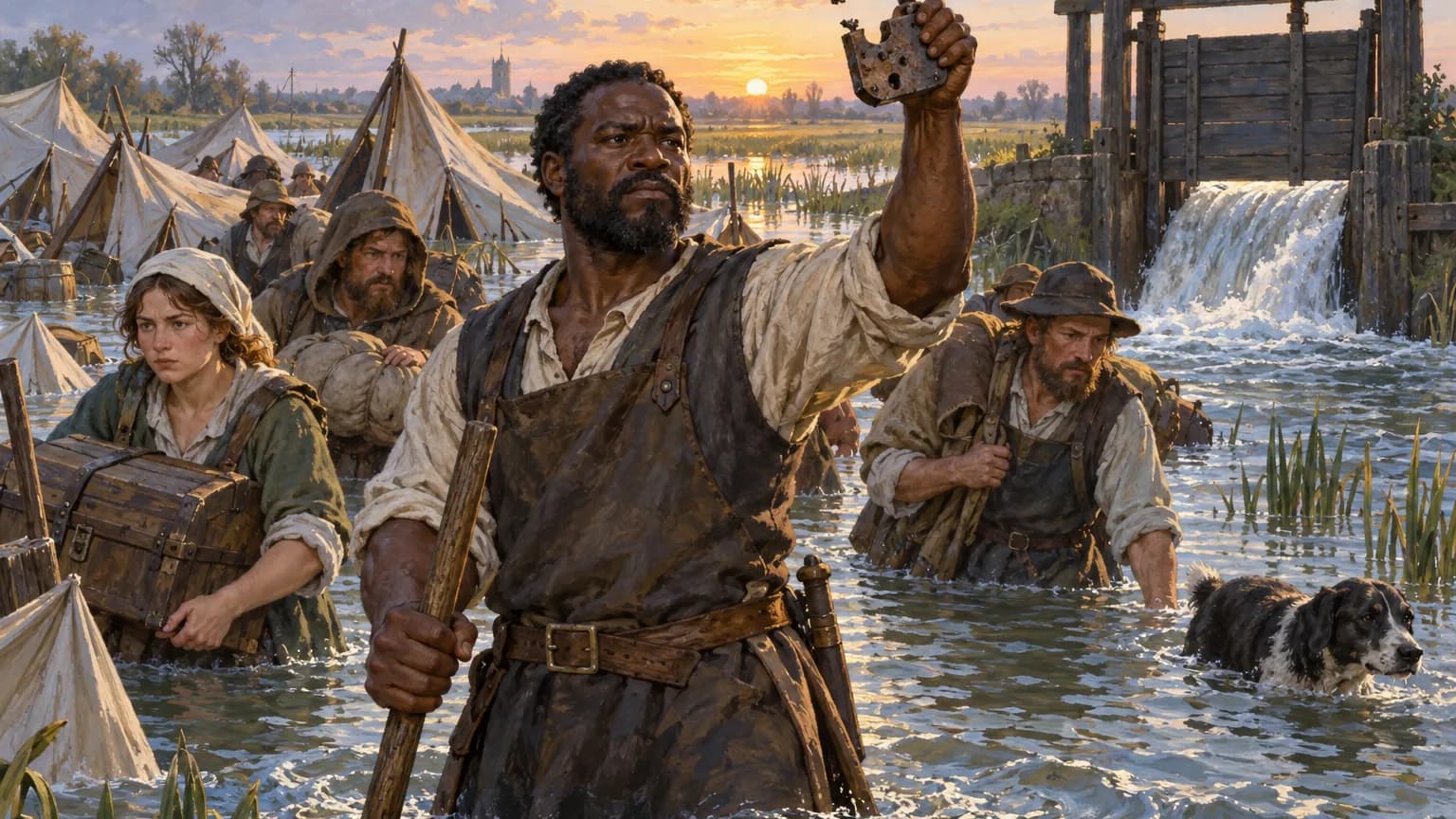
A D&D campaign feels alive when things happen in it that the party didn't cause. To create one, pick about three groups before the first session and write down what each wants and the next few steps it will take to get there. Then, after every session, spend a few minutes deciding what each group did while the party was busy, and how the players will find out. That routine does most of the work, and it takes less prep than a page of history.
The Angry GM describes the opposite well: campaigns where the world only exists within the players' perceptions. "Everything comes to life when the players enter the room or town or forest and then it all goes back to sleep the moment they're gone." Most advice on fixing that stops at "give your factions goals", and a goal on its own never reaches the table. Games built around a moving world, like Worlds Without Number, Blades in the Dark, and Dungeon World, have procedures for the next part, and this guide borrows them for D&D.
Below: what to set up before the first session, the routine after each one, how the changes reach your players, how to keep a moving world from punishing them, and three sessions of one campaign worked through.
What does a living campaign need before the first session?
Less than most GMs expect, and very little of it is history. Sly Flourish puts "Writing a detailed history of your own game world" on his list of prep that gives little back for the time it takes. What a campaign needs to feel alive is a few things already in motion when the party arrives.
Pick about three. Sly suggests "three such fronts" for a campaign, and Kevin Crawford's Worlds Without Number says "About three pertinent background actors is usually plenty for a game." Choose the groups nearest to where the party starts, the ones whose plans will cross the party's path in the first few sessions. A distant empire can wait until the party heads toward it.
Then write a short sheet for each:
- What it wants, in one sentence.
- The next three to five steps it will take if nobody gets in its way. This is the Alexandrian's question, "What is the bad guy trying to do?", written as a list. Dungeon World asks for the same thing in its grim portents: "Think about what would happen if the danger existed in the world but the PCs didn't."
- The people in it the party will meet first. Players care about a group once they've haggled with its clerk.
- What the players have seen of it so far, which at the start is usually nothing.
- A thread to one of the player characters. The Lazy DM asks of each character, "What hook can I include in the next session to draw this character into the game?"
Write each step as something the players could see: a new face at the camp, a burned field, a price that's gone up. Sly describes a villain's steps as "a countdown clock to their final destination, each step visible to the characters to show them the progress." A step like "the guild grows more powerful" gives you nothing to put in a scene.
Important NPCs need the same thing in miniature: a want that doesn't depend on the party, one trait, and a secret. The guide to making characters covers that index card. If you still need the premise itself, the campaign ideas post has twenty, and the beginner campaign guide covers starting small.
What should you do between sessions to keep the world moving?
Run a short update as soon after the session as you can. Gnome Stew's Phil Vecchione argues for a post-game debrief right after play, because "everything is still fresh in your mind." Five questions cover it:
- What did the party do that someone would notice? A door they kicked in, a prisoner they let go, a lie they told their employer.
- What is each group doing right now? Sly Flourish's version is to ask "what is my villain doing right now?" Answer it in light of what the party just did.
- Does each group take its next step? Not every group should move every session. A group the party just poked moves because of it. For the rest, Sly rolls to see which fronts moved and which "have run into troubles outside of the PC's involvement." A simpler version, not taken from any of these games: roll a d6 for each group the party didn't touch. On a 5 or 6 it takes its next step, on a 1 it hits a setback, and otherwise it holds.
- Where do two groups collide? When two groups' next steps land in the same place, that's often your next session's best scene.
- How will the players find out? Decide this for every change, using the next section.
Party success should push a group's plans back, and failure should speed them up. Sly, on giving villains quests of their own: "As your party thwarts his plans, it might push his timeline out. If they fail in one path, it might speed him up."
Write the answers in one place. The Alexandrian keeps a campaign status document for this and describes it as "a change log or diff file: The original scenario notes, by and large, remain untouched. Instead, the campaign status document records how those scenarios have changed." His advice on size: "keep it short, focused, and easily referenced."
How often should the world move?
The games that do this each answer differently, and between them they cover most tables:
| Game | When the world moves | How far |
|---|---|---|
| Worlds Without Number | "a faction turn after every adventure is a good average," or about once a game month | Each faction takes one action |
| Blades in the Dark | Every downtime between scores | The GM ticks forward the clocks of the factions they're interested in |
| Dungeon World | When play shows it, or as the GM's move after a failed roll | One grim portent |
| Sly Flourish's D&D fronts | Before each session | A roll decides which fronts moved, and they move slowly |
For a weekly D&D game, once after every session is a good rhythm. Scale the steps to the time that passed in the world, not at the table: a night's rest might move the nearest group one step, and a month on the road can move all of them. The same goes for how far ahead you prep. The Alexandrian's warning: "Prepping a timeline for the next three weeks is a waste of time if the PCs are likely to be coming back within 48-72 hours."
How do players find out what changed off-screen?
A change the players never see might as well not have happened. Worlds Without Number is blunt about it: "if the actors' actions never become visible then your prep time is not doing you much good." Sly says the same of fronts, which "are only good if the PCs can learn about them."
The Alexandrian sorts changes into two kinds. Bangs are "the places where the active campaign world is going to actively seek them out instead of waiting to react to them": the armed men who ride into camp, the letter that arrives. Background events are "factoids that the PCs usually have to seek out": the gossip at the inn, the new notice on the gate. Decide which kind each change is. If the players need to know about a change for their next choice to mean anything, make it a bang.
Then give it more than one way in. The Alexandrian's Three Clue Rule is about mysteries, but it holds for news too: players miss things, so a change that has one route to the table often never gets there. Three routes that tend to land:
- Someone they already know. An answer on RPG Stack Exchange to a GM whose players felt directionless in a busy world put it this way: "your worlds have a lot happening, but not much that directly concerns the players." Events need "tangible, immediate impacts on the players". The same news lands harder from the cook who has fed them for three sessions than from a stranger in a tavern.
- An aftermath they walk into. In his Ptolus campaign, the Alexandrian has the players arrive just after an event, rather than "hearing about it later through the rumor mill or by reading about it in a newssheet", because then "they can choose to interact with it."
- A detail that's different. A GM's party killed the goblin lookouts at a cave, left the bodies, and went back down the road for a long rest. When the GM asked how to show that the rest had consequences, one answer suggested this, and the accepted answer borrowed it: "The bodies are gone. The entrance has been re-covered. Goblin sentries are hiding in the bushes. Have the goblins call them by name". Nobody has to explain what happened.
Between sessions, Sly suggests flash fiction, "100 to 500 words of in-world narrative," which you can use "to show the players the results of their actions in the world." It gives the players something to read between games, and it reaches them even when they would never have gone looking.
How do you keep a living world from punishing the players?
A world that moves can turn into a world that piles on. Keep the pace slow enough to answer. Sly's warning: "If the fronts move too fast, the PCs can find themselves defeating one villain only to have two others succeed with their nefarious plots." That's why not every group moves every session, and why each step should be visible before the next one lands.
Don't treat skipped content as a mistake to correct. A GM on RPG Stack Exchange asked how to make sure a party's choice to walk past a dungeon had consequences. The top answer pushed back: "Their Actions Did Have Consequences." Throwing the same encounters at the party whatever they choose is, in that answer's words, "railroading." When the party ignores a group, let it take the steps it would have taken anyway and let the players see them. Don't add extra steps to make a point.
Success needs to show as clearly as failure. If the party sets a group back, put the setback where they'll see it.
Example: three sessions in Wythe Fen
Wythe Fen is the campaign worked through in 20 TTRPG campaign ideas. The party are hired hands on a lord's crew sent to drain a fen, and the village that lives off the fen would rather they didn't. The village keeps its floods away with an old bargain: every spring at the equinox, one villager walks into the fen and doesn't come back. Draining the fen breaks the bargain.
That post wrote out the village's plan as a countdown: someone opens the sluice gate on night one, a crew member goes missing on day three, the reeve offers the party double wages to leave on day five, her daughter is measured for a white shift on day seven, the crew's pump is smashed on day ten, and the daughter walks into the water at the equinox. That's one group in motion. Here are two more, and the routine run after each of three sessions.
Two more groups
The lord's steward, Geoffrey Bawsey, runs the drainage and pays the party. He wants the fen drained before the lord's money runs out. If nobody stops him, he will:
- send to Bishop's Lenn for armed men
- have the reeve arrested for the sabotage
- bring in twenty more diggers
- burn the reed beds to dry the ground faster
House Wesenham is a merchant house in Bishop's Lenn, the river city from the names guide, and it buys the village's eels and reeds. A drained fen ends that trade, so it wants the drainage to fail with nothing to tie the failure to Wesenham. Its steps:
- its factor, Alice Fincham, comes to the inn and buys up the crew's unpaid wage slips
- she offers the party better money to work slowly
- she pays one of the crew to wreck the pump
The party knows Bawsey from the first day. Nobody in the fen has heard of Wesenham.
After session 1
Say the party chases the lantern on night one, catches the reeve's nephew at the sluice gate, and lets him go when he begs.
Bawsey will hear that the gate was opened and nobody was caught, so he takes his first step and sends for armed men. The village's countdown runs on schedule: on day three, a digger goes missing. The reeve now knows the party let her nephew go, which will change how she makes her offer on day five. Wesenham rolls a 3 and holds. It's fine for a group to do nothing for a session.
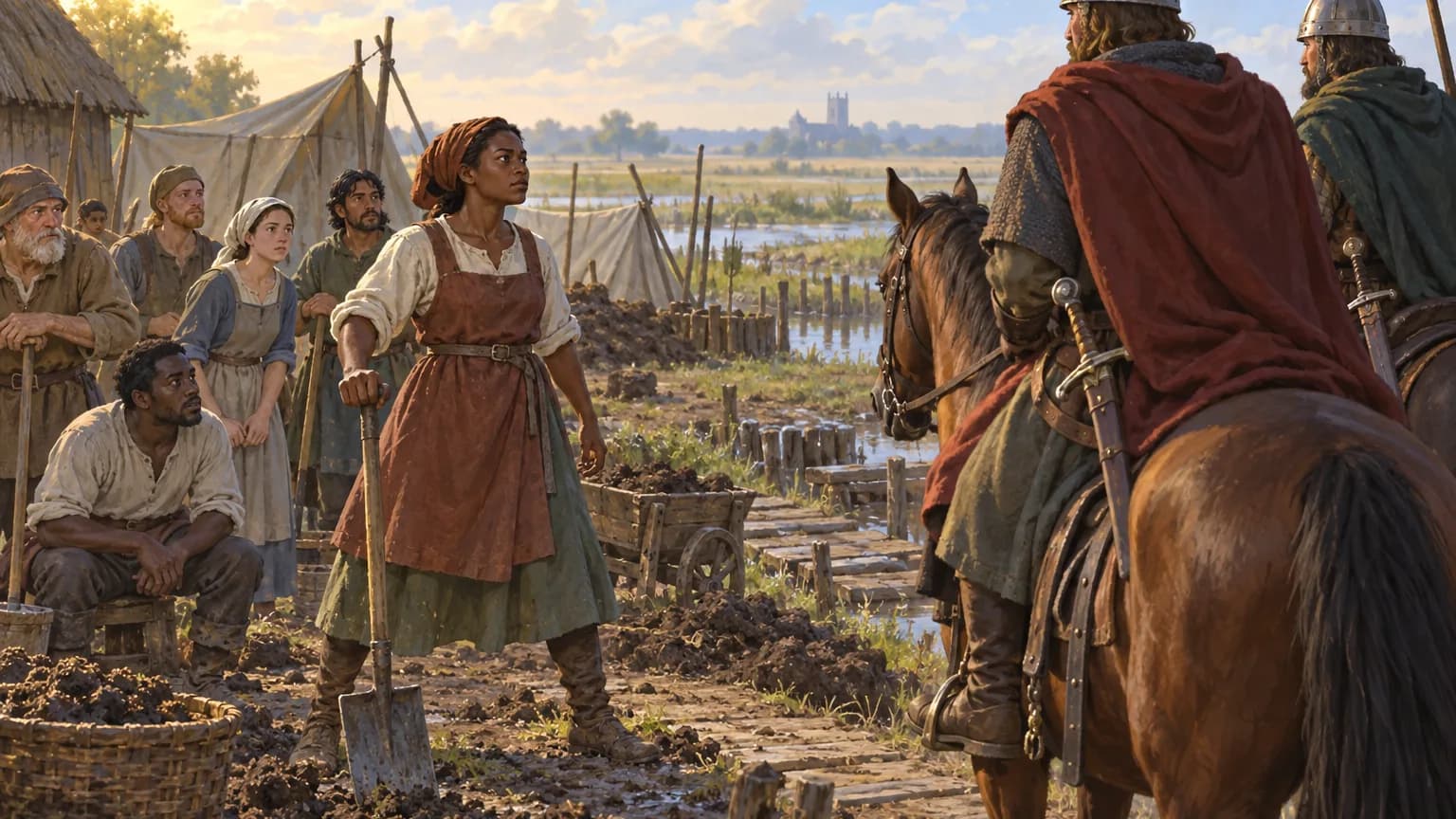
Both changes are bangs. The missing digger's tent is empty in the morning and the crew is talking about it. Two armed men ride into camp at the start of session 2, and the first thing one asks the party is who opened the gate.
After session 2
Say the party searches for the missing digger, finds the post at the fen's edge with a notch for every spring, and tells Bawsey they saw nobody at the gate.
Bawsey's armed men have been asking around the village, and someone tells them the party caught a man at the gate and let him go. The lie fails, and failure speeds Bawsey up: he takes two steps instead of one. He arrests the reeve and sends for twenty more diggers. The party hasn't touched Wesenham, so it rolls again. It gets a 6, and Alice Fincham arrives at the inn to buy the crew's wage slips at half their value. The countdown says the reeve makes her offer on day five, which is now the day she's arrested. That collision is the scene: she makes the offer through the bars of the steward's lockup and asks the party to carry a message to her daughter.
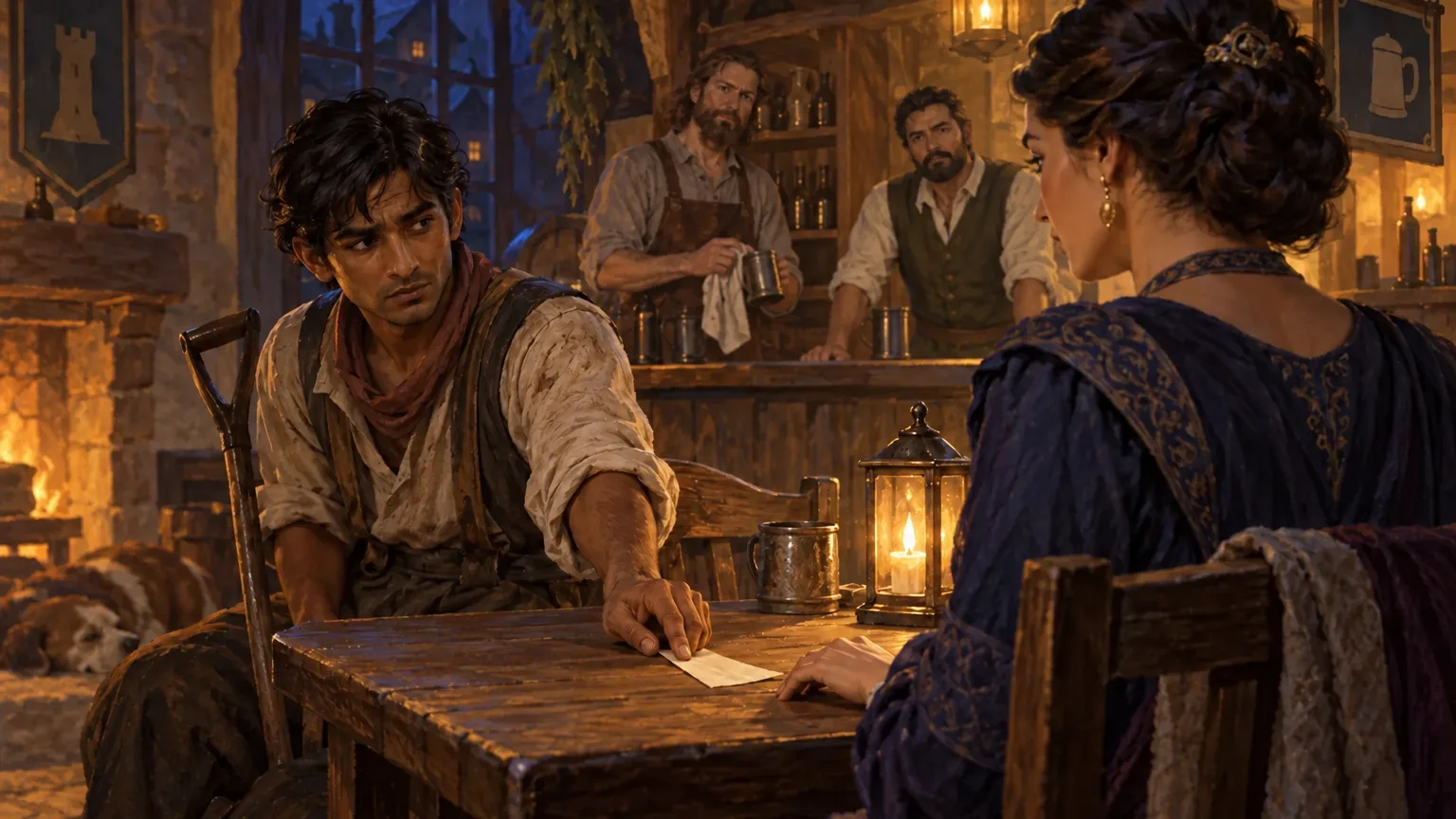
The arrest is an aftermath they walk into. When the party comes back from the fen, the armed men are leading the reeve down the village street while her neighbors watch from their doorways. Fincham is a background event the party has to find, so she gets three routes: a digger the party knows brags that he sold his slip to a woman from Bishop's Lenn; the innkeeper complains that someone is paying for the whole crew's ale; and if the party goes to the inn at night, Fincham is at the corner table with a stack of slips. The new diggers are a bang: twenty strangers with spades march into camp at the start of session 3.
After session 3
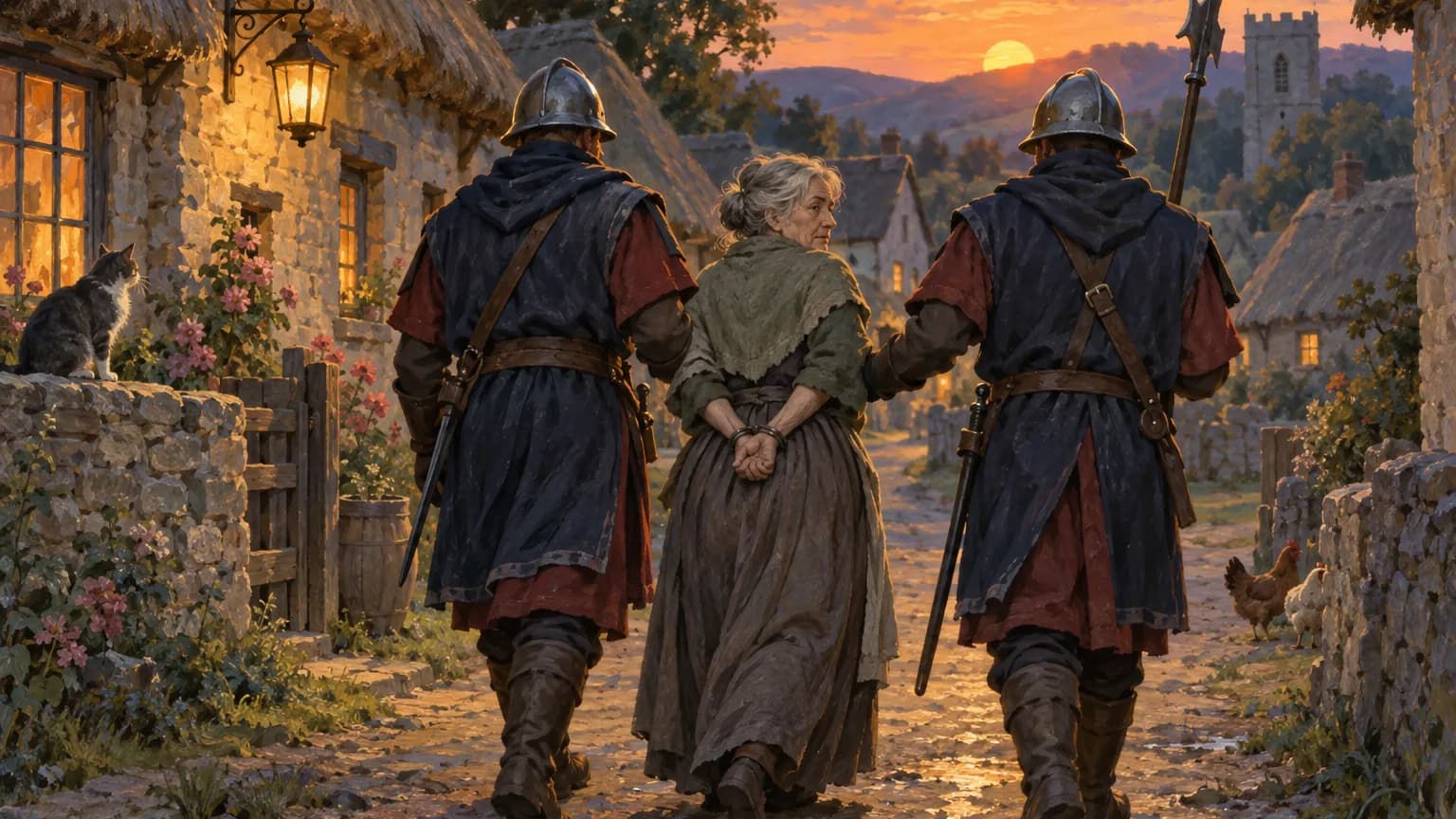
Say the party follows the digger's story to the inn and turns down Fincham's offer to work slowly. Refused, she moves straight to her last step, and that night the party catches a digger at the pump with a purse of Wesenham silver. The village's countdown had the pump smashed on day ten. Wesenham's man got there three days early, and the party caught him.
This time the party's success pushes a group back. Bawsey has proof that someone besides the village is working against him, so he lets the reeve go and sends his armed men to Bishop's Lenn to deal with Wesenham. His last step, burning the reed beds, waits. Fincham leaves town overnight, so whatever Wesenham does next will come from farther away. And the countdown reaches day seven: the reeve's daughter is measured for a white shift.
The reeve back at her own door is a detail that's different, and the party sees it on their way to work. The white shift reaches them through someone they know: the nephew comes to find them. His cousin is being measured for a white shift, he knows what it's for, and he doesn't want her to walk.
Here's the steward's entry in the status document after three sessions:
Geoffrey Bawsey, the steward. Wants the fen drained before the lord's money runs out. Done: sent for armed men (session 1); arrested the reeve and sent for twenty more diggers (session 2); released the reeve after the pump (session 3). Next: burn the reed beds, on hold while his men are in Bishop's Lenn. Players have seen: the armed men, the arrest, the new diggers, the release.
Where Campaign Arks fits
Over a long campaign, the hard part is the bookkeeping: where each group stands, and what the players have actually seen. Campaign Arks is a session-prep assistant for GMs, and it keeps a campaign as documents. Each group gets a Faction document for its goal and next steps, or an NPC document when the group is one person, like the steward. Each session has a Session Log for what actually happened at the table. On Pro, Draft next session reads your recent session logs and prep and drafts the next session for you to edit. It brings forward threads you prepped that play never reached, and opens with a note on what it reviewed and flagged. What each group did in the meantime is still yours to decide.
Prep your next session in Campaign Arks
Prep my next session · Free for one campaign, forever · No credit card
Frequently asked questions
How do I keep track of everything that's changed?
Keep one status document and update it after every session, instead of revising every note you've written. List each group's sheet, what's coming next, and for every change whether the players have seen it yet. Track what the party can reach and let the rest stay vague. The accepted answer to an RPG Stack Exchange question on tracking a changing setting says to "concentrate on only what the players do and experience first hand; everything else is hearsay."
Do I need to track factions the party will never meet?
No. In an EN World thread on how alive the world should be outside the party's reach, one GM put it this way: "Think of it like zooming out on Google Maps. The further away you get, the less detail is written on the map." A distant group can sit still until the party heads toward it. When they do, decide in a few lines what it has been doing.
How much should the world change during a time skip?
As much as the groups' steps would cover in that time. If you know what each group wants and how it means to get there, even a long skip is quick to work out. When a random roll in Sly Flourish's Numenera game threw the party 14 months into the future mid-session, he moved every villain's plans forward 14 months: "In about ten minutes I jotted down the big changes occurring over the past 14 months. The whole campaign changed."
What if my players ignore the hook I prepared?
Then the group behind it takes its next step without them, and the players see the result. The hook was only one way into a situation that keeps going. When a GM asked on RPG Stack Exchange what to do once the party had bypassed the plot, the accepted answer was to drop the plot and keep the cast: "Go along with the PCs' choices and look for opportunities to introduce the interesting people and ideas you have prepared."
Should I recap off-screen events at the start of a session?
Keep it to a line or two, if you do it at all. Asked on EN World whether players care about the game world, Morrus said it depends on how it's delivered: "a big info dump, no, I find that hard to digest." Most changes land better as something the players find in play, and flash fiction between sessions covers the rest.
Can I run a published adventure this way?
Yes. Many published adventures already give the villains a plan, and you can write it out as steps. Sly Flourish wrote fronts for Storm King's Thunder and kept them slow, so the characters have time to stop them once they learn of them: "We can keep this relaxed pace and still have these fronts moving forward. They just move slow."