20 TTRPG Campaign Ideas and How to Start Them
Twenty premises grouped by how much they ask of the GM, and one taken from pitch to first session
September 30, 2026
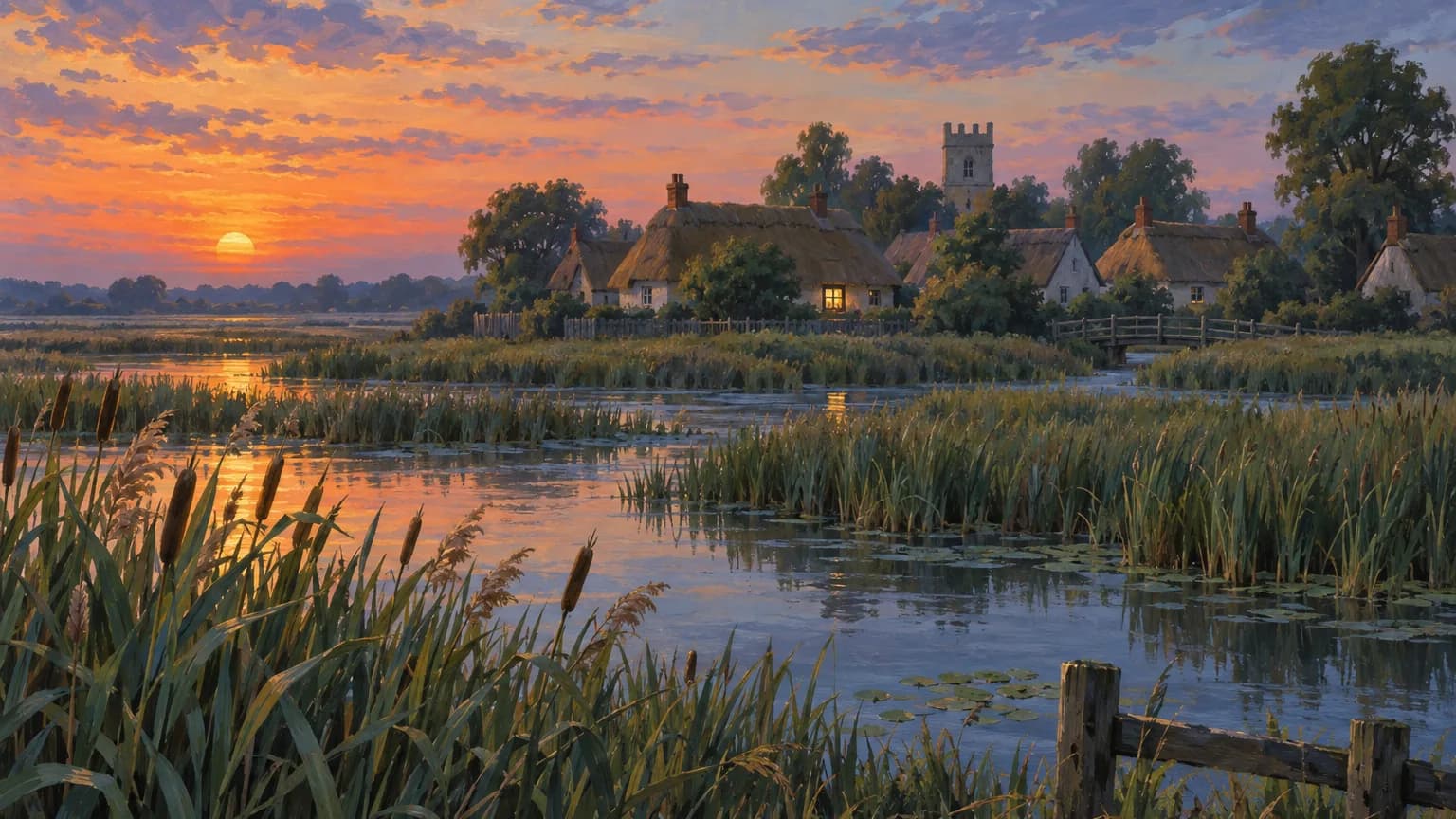
These 20 TTRPG campaign ideas are grouped by how much they ask of the GM running them, starting with five that make good first campaigns and ending with three you add to a campaign that's already running. Each one comes with a way to start it and a published game that already runs the premise, so you can see how someone else solved its hard parts. After the list, one idea goes all the way from pitch to first session.
When Sly Flourish polled 2,600 of his followers in 2022, 47% said their campaigns rarely or almost never reach a satisfying ending. When he asked on Twitter why, "scheduling was, by far, the number one reason." A good first idea is one that can start small and end before your group's calendar ends it for you.
What makes a campaign idea work?
The Angry GM treats a premise as a planning tool as much as a pitch: it describes who the characters are, why they are together, and what they will do. Three more tests, from GMs who've written a lot about starting campaigns:
- It fits in a sentence. On a campaign's theme, Sly Flourish says "The shorter this is, the better. Ideally one sentence."
- It sets up a situation, with the outcome still open. The Alexandrian's rule is "Don't prep plots, prep situations": who wants what, and what happens if nobody steps in.
- It fits the time you actually have. The Angry GM's "dirty little secret" is that "the campaign you will run is the campaign you are able to run, not the one you want to run."
Five ideas for a first campaign
These stay in a small area and give the party a clear job, so they suit a table that's still learning the game.
1. The town with a dark secret
The party arrives somewhere that looks ordinary and slowly learns it isn't. The campaign asks what the town is hiding and who it's hiding it from, and you can run the whole thing from one map.
First session: the party is guarding a sluice gate for a lord's drainage crew when someone opens it in the night. By morning the whole village denies it. This one is worked through in full after the list.
Borrow from: Chaosium's Escape from Innsmouth (1992) puts a whole town's secret in front of Call of Cthulhu investigators. Whatever your secret is, follow the Alexandrian's Three Clue Rule: "For any conclusion you want the PCs to make, include at least three clues." A mystery with one clue stalls the moment the players miss it.
2. The monster hunters
The party hunts dangerous creatures for coin or duty, one hunt at a time. Each hunt stands on its own, which is why this premise survives a group where someone misses every third week. A bigger thread can wait until the table wants one: the monsters are getting worse, and somebody is sending them.
First session: a village pays the party to kill whatever is taking sheep from the high pasture. The tracks lead to something that isn't a wolf, and it's wearing a collar.
Borrow from: Monster of the Week (Evil Hat) runs every hunt on a countdown. Its advice, quoted by Troy Press, is to "think about what would happen if the hunters never came to help," then split that into six events in the order they'd happen. It works in any system. Vaesen (Free League) sends its hunters after creatures from Nordic folklore.
3. The bureau of magical crimes
The characters work for an agency that investigates what ordinary law can't touch: a curse on a guildhall, or a dead clerk still walking to work. Cases stand alone, and a slower thread runs underneath them (someone inside the bureau keeps losing the evidence). A new player joins as a new agent, with nothing to explain.
First session: a warehouse fire that burned cold. The owner wants the insurance paid, and the bureau wants to know why the ash is still frozen.

Borrow from: Delta Green (Arc Dream) is about "a secretive organization tasked with protecting the United States from paranormal and alien threats," and Candela Obscura (Darrington Press) sets its investigators in a turn-of-the-century city. Run their cases on the Three Clue Rule too.
4. The lost expedition
The party follows the trail of an expedition that vanished looking for a lost place. Every abandoned camp tells part of what happened, and the ending is built in: the party finds the expedition, or what's left of it.
First session: the expedition's sponsor hires the party and hands over the last letter the leader sent home. It mentions a guide nobody remembers hiring.
Borrow from: Chaosium's Masks of Nyarlathotep follows "the ill-fated Carlyle Expedition" from city to city. It's one of the longest campaigns in print, so take its structure, a trail of places that each hold part of the story, and run something shorter with it.
5. From nobodies to legends
The characters start as farmhands and apprentices, with nothing to their names, and the campaign grows outward from one village as they do. It suits a new GM because level 1 is also where the rules are simplest, and you can stop after any adventure.
First session: the village's only adventurer comes home dead across his saddle, and the characters are the ones standing in the square.
Borrow from: Phandelver and Below: The Shattered Obelisk (2023) takes a D&D party from level 1 to 12 around the village of Phandalin, expanding the 2014 starter adventure Lost Mine of Phandelver. Flatland Games' Beyond the Wall is built for this premise: "a kit to make a gang of childhood friends and send them off on their first big adventure."
Six ideas with more moving parts
Each of these adds something the first five don't have to manage: a travel or heist procedure, several factions at once, or a wider world. Start one once you've run a few sessions.
6. The city of hidden factions
Guilds, noble houses, and a thieves' syndicate are fighting quietly over the same city, and the party is useful to all of them. Everything happens in one place, so you reuse the streets and the NPCs for months. The campaign asks who ends up running the city, and whose side the party is on when it happens.
First session: two factions hire the party for the same job on the same night, and neither knows about the other.
Borrow from: Waterdeep: Dragon Heist (2018) is a D&D hunt for a hoard of gold hidden in the city, with the villain set by which season you run it in. Blades in the Dark supplies the part that keeps a city moving: "Each faction has a long-term goal," with a clock the GM ticks forward between jobs, so the city changes while the party is busy. Start with four or five factions.
7. The heist crew
The party plans and pulls off jobs against well-guarded targets, each one bigger than the last, building toward a job that looks impossible.
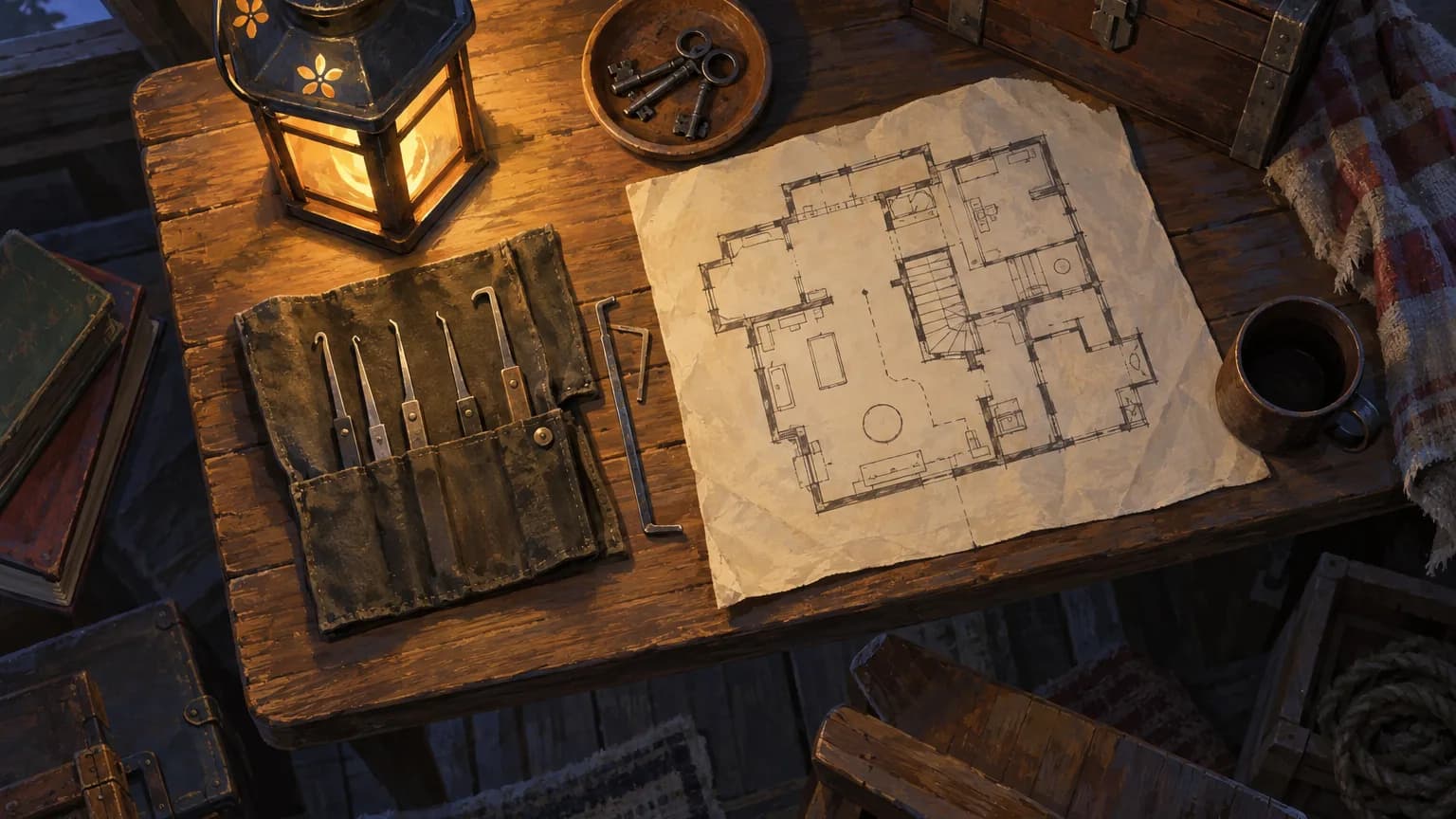
First session: lift a ledger from a moneylender's office while his daughter's wedding goes on upstairs.
Borrow from: Keys from the Golden Vault (2023) is thirteen standalone D&D heists for levels 1 to 11, each with a map for the players to plan from. The trap in a heist campaign is a planning session that eats the whole evening, and Blades in the Dark gets around it. The players choose the kind of plan, a roll sets how well it's going, and "you can invoke a flashback" to show the preparation at the moment it matters.
8. The journey across unknown land
The party has to cross country nobody has mapped, usually carrying something or racing someone there. The trip is the campaign, and every stretch brings a new problem.
First session: the caravan's guide deserts on the first night and takes the only map with her.
Borrow from: D&D's travel rules, the Alexandrian says, "are scattered haphazardly throughout the rulebooks", so borrow a procedure from a game built around travel. The One Ring centers on the hardship of a long journey and gives each character a job on the road: scout, guide, lookout, or hunter. Forbidden Lands has quick rules for "travel, scouting, foraging, hunting, striking camp." In D&D, Tomb of Annihilation (2017) crosses the jungles of Chult.
9. The civilization beneath the surface
The party finds a society underground, with its own history and its own quarrels, and nobody on the surface knows it exists. You can build it without building a whole world above it.
First session: the party wakes up as prisoners of the people below and has to get out.
Borrow from: Out of the Abyss (2015) opens with the party captured by drow in the Underdark. Sly Flourish warns that groups who want to be walked through a story step by step will find it likely to disappoint, and suggests leaning into survival while it's new: "If the PCs find drinking water, how do they carry it?"
10. The artifact everyone wants
One powerful object turns up, and every faction wants it. Give each faction a different belief about what it does, and every NPC who's heard a rumor becomes a lead.
First session: a courier dies at the party's table in a roadside inn, and the thing in his satchel is warm to the touch.
Borrow from: Vecna: Eve of Ruin (2024) sends a party across the multiverse after the pieces of the Rod of Seven Parts. It runs from level 10 to 20, so read it for ideas rather than running it first. Decide early what happens when the party holds the artifact, because they'll want to use it.
11. The world after the war
A long war has just ended. The party lives among refugees with competing claims and soldiers with nowhere to go, and the campaign asks what the new world becomes.
First session: a soldier from the losing side asks the party to get him home, through the town his unit burned.
Borrow from: Eberron: Rising from the Last War (2019). Its creator, Keith Baker, describes its continent as "only two years out from a bitter civil war that lasted for decades", and the book is built around what that does to the people living there.
Six big premises to start small
These sound best at the start and are the hardest to finish. Each one has a hard part, and for each there's a way to open on one piece of the premise and put that part off.
12. The villains already won
The heroes lost. The dark lord rules, and the party is what's left of the resistance. The hard part is hope: a campaign spent losing wears a table down.
Start small: one cell of rebels in one occupied city, and an early win the players can see, like one prisoner out and alive.
Borrow from: Midnight (Fantasy Flight Games, 2003) is set "one hundred years after the dark god Izrador has won a war of domination." Paizo's Hell's Rebels keeps it to one city under martial law, Kintargo, and asks whether "a small group of heroes and would-be rebels" can stand against the house that rules it.
13. The war between factions
Kingdoms or armies are at war, and the party's choices decide how it goes. The hard part is making five characters matter in a war of thousands. The Alexandrian, in his Storm King's Thunder remix, says the battle system in D&D's Shadow of the Dragon Queen (2022) gets this wrong: "the PCs' actions don't truly have an impact on the outcome of the battle." His fix is to give the party "essential special ops missions" the war turns on, like cutting a supply line or opening a besieged gate.
Start small: one mission. Hold a bridge until the army crosses.
Borrow from: Shadow of the Dragon Queen for the war itself, and the Alexandrian's remix for the missions.
14. The adventurers become rulers
After a few adventures, the party ends up in charge of something, like a keep or a guild, and adventuring now comes with neighbors and people who depend on them. The hard part is bookkeeping that crowds out adventure.
Start small: one village that needs a protector, and one decision about it per session: who gets let in, what gets built, which debt gets paid.
Borrow from: Paizo's Kingmaker is the whole kingdom, with rules "for building and running kingdoms, settlements, and armies." In D&D, the 2024 Dungeon Master's Guide adds Bastions, a base of operations each character usually gets at level 5. Stonetop gives the home village a playbook of its own that grows and suffers alongside the characters.
15. The kingdom that returned
A kingdom that vanished centuries ago comes back with its old laws and its old grudges, and nobody alive knows why it left. The hard part is a whole culture to invent before anyone meets it.
Start small: the first frontier town the returned kingdom reaches, and one envoy who arrives with a deed to the town well, written in a language nobody reads. Let the players learn the kingdom through what the envoy wants and the customs they get wrong.
Borrow from: in Paizo's Return of the Runelords, ancient wizard-kings "stir to terrible life once more, surging across the frontier with plans to reignite their time-lost empire." It runs from level 1 to 20.
16. The planar travelers
The party travels between worlds that run on different rules, like a plane where dreams are solid. The hard part is that every plane is a new setting to build.
Start small: one town with one gate, as home base, and one plane on the other side of it. Open the next gate when the players have used up the first plane.
Borrow from: Planescape: Adventures in the Multiverse (2023) is built this way. Each of its gate-towns has a gate to one of the Outer Planes, and each town has "certain regional effects that stem from the plane's environment," so the home base already feels like the plane next door.
17. The time travelers
The party can move between eras, and changing the past changes the present they come back to. The hard part is tracking what the changes did.
Start small: one present-day town and one era to visit. Let the party learn what a change costs before you open up more of history.
Borrow from: Pelgrane Press's TimeWatch is a time-travel investigation game with rules for "the dangers of paradox." Decide before the first session what happens when the party changes something, and write it down.
Three layers to add to a running campaign
Add one of these once a campaign is going. Each works as a complication on top of another premise.
18. The rival adventuring party
Another group keeps turning up after the same treasure and the same reward. Players learn the rivals' names, and the rivalry can turn into a grudge or an alliance.
Add it when: the party has a reputation worth protecting.
Borrow from: Critical Role: Call of the Netherdeep (2022) has a rival party that "will level up as the players do." One GM on Gnome Stew, whose group grew bitter about a rival party that leveled faster than they did, recommends making sure rivals "earn" their XP "at a rate that seems fair to the players."
19. The monsters aren't the enemy
The creatures the party has been hunting turn out to be protecting something, or running from something worse. Talking starts to matter as much as fighting.
Add it when: the party has killed enough of them to feel it. It pairs naturally with idea 2.
Borrow from: in The Wild Beyond the Witchlight (2021), as Sly Flourish points out, "every combat encounter in Witchlight is optional." Read it for how to write a threat the party can talk down.
20. The world without magic
Magic stops working overnight. The spellcasters have to work out who they are without it, and finding out what caused it can carry the rest of the campaign.
Add it when: the players rely on magic enough to miss it. Talk to your spellcasters' players before you do it to them.
Borrow from: TSR's Dragonlance: Fifth Age (1996) opened on a world where "the old magic of the world is now gone."
Every idea at a glance
"Missed sessions" is how well the idea copes when a player can't make it.
| Idea | Missed sessions | Book to read (system, levels) |
|---|---|---|
| 1. Town with a dark secret | Harder: one continuous mystery | Escape from Innsmouth (Call of Cthulhu) |
| 2. Monster hunters | Easy: each hunt stands alone | Monster of the Week; Vaesen |
| 3. Bureau of magical crimes | Easy: each case stands alone | Delta Green; Candela Obscura |
| 4. Lost expedition | Harder: one trail | Masks of Nyarlathotep (Call of Cthulhu) |
| 5. Nobodies to legends | Fine between adventures | Phandelver and Below (D&D, 1 to 12); Beyond the Wall |
| 6. City of hidden factions | Fine between jobs | Waterdeep: Dragon Heist (D&D); Blades in the Dark |
| 7. Heist crew | Easy: each job stands alone | Keys from the Golden Vault (D&D, 1 to 11) |
| 8. Journey across unknown land | Harder: the party travels together | The One Ring; Tomb of Annihilation (D&D) |
| 9. Civilization beneath the surface | Harder: no easy way home | Out of the Abyss (D&D) |
| 10. Artifact everyone wants | Fine between leads | Vecna: Eve of Ruin (D&D, 10 to 20) |
| 11. World after the war | Fine between adventures | Eberron: Rising from the Last War (D&D) |
| 12. Villains already won | Fine between missions | Midnight (d20); Hell's Rebels (Pathfinder) |
| 13. War between factions | Fine between missions | Shadow of the Dragon Queen (D&D) |
| 14. Adventurers become rulers | Easy: home base is always there | Kingmaker (Pathfinder); Bastions (D&D 2024); Stonetop |
| 15. Kingdom that returned | Harder: one unfolding story | Return of the Runelords (Pathfinder, 1 to 20) |
| 16. Planar travelers | Fine between trips | Planescape (D&D) |
| 17. Time travelers | Harder: changes pile up | TimeWatch |
| 18. Rival party | Follows the main premise | Call of the Netherdeep (D&D) |
| 19. Monsters aren't the enemy | Follows the main premise | The Wild Beyond the Witchlight (D&D) |
| 20. World without magic | Follows the main premise | Dragonlance: Fifth Age |
How do you turn a campaign idea into a campaign?
Here's idea 1 taken from pitch to first session, as a worked example. The same steps work for any of the first seventeen.
Write the pitch in one sentence
You're hired hands on the lord's crew sent to drain Wythe Fen, and the village that lives off the fen would rather you didn't.
That tells the players what characters to make (people who'd take the job), why they stay together (the contract), and what they'll be doing: draining the fen, and finding out why the village fights it.
Give the players a few truths
A truth, in Sly Flourish's sense, is one of the "known facts about the world. You know them. Your players know them. Their characters know them." He writes six for a long campaign. Wythe Fen needs three:
- The lord owns the fen on paper, but the village has fished it and cut its reeds for longer than anyone has records.
- The survey crew the lord sent last spring never came back to collect their pay.
- The church bell hasn't rung in a year.
Decide the secret and what happens if nobody steps in
This is the situation. Wythe Fen keeps its floods away with an old bargain: every spring, at the equinox, one villager walks into the fen and doesn't come back, and the church bell rings for them. Last spring the lord's survey crew arrived the week before the equinox, so the village cut the bell rope to keep the walk quiet. The crew saw it anyway, and they went into the fen too. Draining the fen breaks the bargain.
Then write out what happens if the party does nothing, in the six steps Monster of the Week uses:
- Night one: someone opens the sluice gate the party is guarding.
- Day three: one of the crew goes missing.
- Day five: the reeve offers the party double the lord's wages to leave.
- Day seven: the reeve's daughter is measured for a white shift.
- Day ten: the crew's pump is smashed in the night.
- The equinox: the reeve's daughter walks into the water. If the fen has been drained by then, the flood comes instead.
Give the key conclusion three clues
The players need to work out one thing: the village gives someone to the fen every spring. Three clues point there:
- A post at the fen's edge carries a notch for every spring as far back as anyone remembers, and a fresh knife mark where this year's will go.
- The bell rope was cut last spring, the week the survey crew arrived, and the oldest villagers still say the bell always rang on the equinox.
- The parish register lists a burial every spring for as far back as it goes, and there are no graves to match.
Write more clues than you think you need. Players miss them.
Open with something happening
A slow first scene is the one most likely to lose a new table. Sly Flourish calls the opening "likely the most important piece of preparation we can do", and advises "When in doubt, start with a fight." Wythe Fen opens on night one of the countdown: the sluice gate groans open in the dark, water is pouring into the camp, and someone with a lantern is running for the village.
The reeve needs little more than a card: she wants the crew gone before the equinox, she's always polite, and her daughter is next. That's the index-card method from our guide to making characters with AI. For the rest of first-session prep, the beginner campaign guide has a checklist for knowing when you're ready.
Agree how long it runs
Wythe Fen runs to the equinox: six countdown steps, so six to eight sessions. That's in line with the 8 to 12 session mini-campaigns Sly Flourish recommends, campaigns "small enough to fit into our gaming lives." If the table wants more at the end, the lord who ordered the drainage may have known about the bargain all along. Gnome Stew's Phil Vecchione describes his group's 4-Session Rule: "we do not pass judgment on a game until we have played it for four sessions." Check in with your players after the fourth. To keep the village and anyone else with a stake in the fen moving between sessions, the guide to creating a D&D campaign that feels alive works through three sessions of Wythe Fen.
Pitch it before you prep it
Share the sentence and the truths before you write anything else, and ask whether the table wants to play it. If you can't choose between two ideas from this list, pitch both in a sentence each and let the players pick. The Angry GM's rule runs both ways: "The PLAYERS have to agree to the PREMISE. And the PREMISE has to be based on the PLAYERS." A hook tied to something the players already chose is the one they chase, which is the whole argument of writing plot hooks players won't ignore.
Keep the ideas you didn't use in a GM backlog. A rival party can turn up in Wythe Fen in session five.
Where Campaign Arks fits
Over six to eight sessions, the hard part is keeping Wythe Fen straight: where the countdown stands, and which clues the party has already found. Campaign Arks is a session-prep assistant for GMs. On a new campaign's setup page, describe your premise, and the setup assistant suggests documents for the people, places, and factions you mention, each yours to accept or dismiss. The reeve becomes an NPC, and each clue gets its own Secrets & Hooks document that you mark revealed once the party finds it. On Pro, switch on Advanced in the Workshop, and the assistant searches and reads the campaign's documents before it suggests a new one or an edit, so what it drafts starts from what's already true in Wythe Fen.
Prep your next session in Campaign Arks
Prep my next session · Free for one campaign, forever · No credit card
Frequently asked questions
Should my first campaign be homebrew or a published adventure?
Either works. A published adventure hands you the situation, the clues, and the maps, which is most of the hard part, and the table above names one for every idea. Homebrew is at least as common: in a 2020 poll of 704 of Sly Flourish's followers, 57% picked homebrew adventures over published ones. The first five ideas are the easiest to homebrew, because they're small.
Can I run a published adventure's premise in a different system?
Yes. The situation and its clues carry over to any system, and the monsters and rewards are what you convert. The procedures travel too: Blades in the Dark's faction clocks and Monster of the Week's countdowns need no rules of their own, so both drop into a D&D campaign unchanged.
Can I combine two of these ideas?
Yes, and the layers at the end of the list are made for it. Some pairs that fit together: monster hunters who learn the monsters aren't the enemy (2 and 19), a heist crew working a city of factions (7 and 6), or heists run by the resistance in an occupied city (7 and 12). Keep one idea as the premise the players agreed to, and let the second arrive in play.
Do I need a session zero?
GMs disagree. Sly Flourish recommends one that covers the campaign's truths, what the characters are trying to do, and the safety tools you'll use. The Angry GM argues that campaigns which benefit from one "are the exception, not the rule." With a new group, a short session zero followed by a short adventure is the safe choice, and Sly's campaign checklist suggests the same: "Run a short adventure if you have the time."