How to Run a DnD Sandbox Campaign Without Losing Control
Choices your players can weigh, prep that follows where they say they're going, and threads that keep moving when they're skipped
November 13, 2026

To run a DnD sandbox campaign without losing control, put two or three options in front of the players that they can tell apart, ask at the end of every session where they're going next, and prep that. Everything they skip keeps moving on its own, at a pace the players can see. You give up control of the route, but you still decide what's out there, what it wants, and how fast it moves.
Sandboxes tend to fall apart in a few places. The players can't tell their options apart, so they sit still or walk to the only place they've heard of. They go somewhere you haven't prepped, and you're tempted to move your prep to wherever they went. They walk into something that kills them. Threads pile up until nobody remembers which ones are live. Or the campaign never ends, because nothing in it was built to.
Below: what to set up before the first session, then each of those problems in turn, and three sessions of a sandbox set in Bishop's Lenn, the river city from the guide to making characters.
What does a sandbox campaign need before the first session?
A home base, one conflict big enough to touch most of what happens, a handful of situations already in motion, and something the party can always do when nothing else appeals.
The conflict gives the campaign a direction without fixing a route. Bishop's Lenn has three merchant houses: Swerdeston owns the grain wharves, Wesenham insures the cargo and holds half the waterfront's mortgages, and Parmenter runs the shipyards on cheap labor. Each wants more of the city. Decide what each house wants and leave the winner open. The party's choices settle that, and every side job becomes a move in the larger game.
Then write a few situations. The Alexandrian's rule is "Don't prep plots, prep situations": a situation is "merely a set of circumstances," and what happens next depends on what the players do. A few lines each are enough: who wants what, what they'll do next, and what happens if nobody steps in. Here are four for Bishop's Lenn:
- Upriver in Wythe Fen, the lord's steward, Geoffrey Bawsey, is draining the marsh, and the village fights every shovel. He's hiring guards. If nobody stops him, he sends for armed men, arrests the village's reeve, and burns the reed beds to dry the ground faster.
- Dena of the Grain Wife, a barge skipper, carries Wesenham goods the harbor clerk never records, and she needs guards who ask no questions. Turn her down and she hires worse ones.
- House Parmenter had a dwarf's caravan ambushed, and Sir Walter Halyate, a priest new to the dockside chapel, was its chaplain. He ran, he saw who gave the order, and Parmenter knows it. He wants someone to protect him. If nobody does, Parmenter's men find him first.
- The Swerdeston account book that got a scholar expelled is still in the university library. Swerdeston has asked the master to burn it before the new term, and if nobody steps in, the only proof of what's in it goes up in smoke.
Three of those four come from the party's backstories: the dwarf fighter lost his crew in that ambush, the halfling rogue owes Wesenham money, and the wizard is the expelled scholar. A thread tied to a character is one the players already care about, and the guide to plot hooks covers building them. The fen is the world's own business, and it reaches the party later, in the example.
Last, give the party a default action: something they can always do that turns up new trouble. The Alexandrian says a sandbox needs one, so that "it should basically be impossible for the players to ever say, 'I don't know what to do.'" In a hexcrawl it's "pick a direction and go." In Bishop's Lenn it's working the quay, where there's always a cargo to guard and someone who wants it to go missing.
Each house and each situation also needs a short sheet of what it wants and its next few steps. The guide to creating a D&D campaign that feels alive covers those sheets and the routine for moving them after every session.
How do players know enough to choose?
Give them a few options at a time, and tell them enough about each to pick one on purpose. This is where a lot of sandboxes stall, and the fix is in the prep.
On RPG Stack Exchange, a GM who'd left the players to discover the city for themselves described what happened next: "the players went straight to the tower, and I can kinda see why - that's the only interesting place they knew of." In a world with one visible option, the players will take that option.
Too many options fail the other way. Answering a reader on his blog, the Alexandrian's Justin Alexander puts "2-4 hooks at one time" as "the sweet spot" for players new to this style, "and only some of them, or quite possibly none of them, should feel urgent." The Angry GM puts it lower: "Players are perfectly happy with two or three options." You can have more situations running in the world than you put on the table. Bishop's Lenn has four, and the quay offers three.
Then make the options different from each other in ways the players can see. In Hack & Slash's posts on the quantum ogre, -C puts it bluntly: "Don't give the players blind choices. Always give some sort of information with the choice." A rumor is useful when it tells the players what they're risking, how soon it matters, and what it pays. Here's what the party hears on the quay in Bishop's Lenn:
| Rumor | Risk | Urgency | Reward |
|---|---|---|---|
| The fen steward is hiring guards | Medium: angry villagers | High: the villagers say something happens at the equinox, under three weeks off | Steady wages |
| Dena needs an escort tonight, no questions asked | High: harbor patrols | High: the barge leaves at dusk | A cut of the cargo |
| The new priest at the dockside chapel wants a bodyguard and won't say why | Medium: whoever he's afraid of | Medium: he's scared enough to pay | Small pay, and he knows something about the caravan ambush |
Each important fact also needs more than one way in. If the only person who knows about the priest is a drunk the party never talks to, the thread doesn't exist. The Alexandrian's Three Clue Rule asks for at least three.
What do you prep when you don't know where the party will go?
Ask the players. Near the end of every session, ask where they're going next, write it down, and prep that destination in detail. The Alexandrian calls it "one of the most potent tools in the GM's arsenal": "What are you planning to do next session?" The Angry GM asks the same thing every session and builds his prep list from the answers.
Leave time for it. Sly Flourish suggests you "end the main event of a session ten or fifteen minutes early so the players can discuss, debate, and choose options before the game's over." A choice made in the parking lot after the game is better than none, and a choice made at the start of next session leaves you with nothing prepped.
Then prep in two sizes. The named destination gets the full treatment: who's there, what they want, the scene you'll open on. Every other place gets a line or two. Add one portable piece that fits anywhere, like an NPC with a want, a complication, or a fight that could happen on any road. Keep the pieces you don't use in a GM backlog, so prep that missed this week can turn up next month.
The players will still surprise you sometimes. The Alexandrian admits as much: he once had a group change its mind between sessions after he'd "written a really nifty 70 page dungeon that I then had to toss out." When it happens, run from the situation notes. If you know who's in a place and what they want, you can play the next hour without a map.
Can you move prepped content to wherever the party goes?
Sometimes. The test is whether moving it undoes a choice the players made with real information.
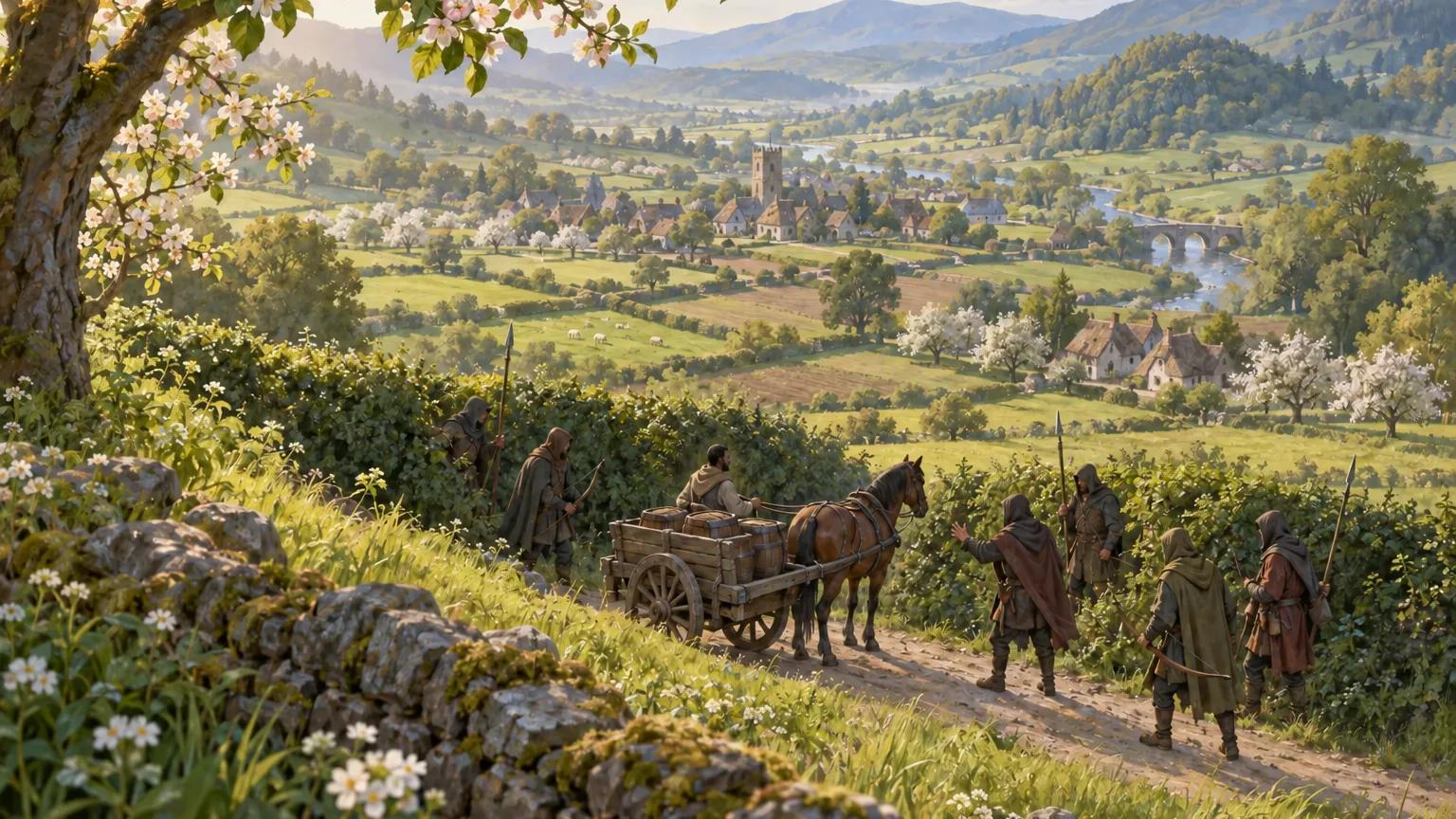
This is the "quantum ogre" argument. The Alexandrian defines it as "a common form of railroaded illusionism in which the GM forces the players to experience a particular encounter no matter what choice they make": the party takes the left road to avoid the ogre, so the ogre is on the left road. He also admits that the line between that and "responsibly recycling material" "can be difficult to precisely define." The other side has a point too. Noisms, at Monsters and Manuals, asks "What is a random encounter table, but a list of quantum ogres?"
In practice, ask what the thing would do if the party weren't involved. Bandits who planned to hit the coast road can turn up on the inland road, because roads are where bandits work, unless the party chose the inland road because they'd heard about the bandits. A wyvern nest on the ridge stays on the ridge, even after the players heard about it and went around. A fight, a clue, or an NPC you prepped but never tied to a place can go anywhere, since it's a random encounter you wrote yourself.
What the players turned down knowing what it was stays turned down. Don't bring it back by another road. Let it play out on its own instead.
What if the party walks into danger above their level?
Let it stay dangerous, and make sure they could see it coming. A sandbox's dangers don't scale to the party, and that's part of what makes the choices real. On EN World, a GM running Princes of the Apocalypse asked what to do when the players skip the level 3 dungeon for the level 6 one. One reply: "a defining feature of a sandbox is the idea that the challenges don't adapt to a PC group's level."
That only works if the players get warnings. Let them meet the danger before it meets them: a survivor on the road, tracks too big for anything they've fought, locals who won't go near the place. The accepted answer to a question on RPG Stack Exchange suggests scaling encounters by distance from home base and telling the players from the start "that they will run into trouble the further they push, but the rewards are also sweeter." The most-upvoted answer on the same question goes further: "The cause of your problems isn't open world, the problem is the preconception that PCs can always solve the problems in front of them with combat."
So give every dangerous place a way out that isn't a fight, and show the players early that retreat is allowed. If they push in anyway, after the warnings, let the threat keep its full strength.

What happens to the threads the party ignores?
They move on without the party, at the speed time passes in the world, and the players see each step. A skipped thread that waits in place for months tells the players the world only exists where they're standing.
Two things keep this from turning into punishment. First, ignoring a hook is usually the sandbox working. A GM on RPG Stack Exchange worried that the party wouldn't take up anything they were offered. The accepted answer said the players were "doing precisely what they should be doing in a sandbox game: They have set an objective and try to accomplish it, while ignoring unrelated hooks."
Second, a skipped thread can get worse, but it shouldn't get settled without the party. Gnome Stew's Angela Murray has heard sandbox GMs complain that the players ignored every hook, so the big bad won. Her objection: "My pet peeve with this is that means the PCs are irrelevant to the world's story." Let each step make things harder, and leave something the party can still change when they come back. The routine for deciding which groups move each session is in the guide to a campaign that feels alive.
Then keep the live list short. The same two to four that work for hooks work for open threads. When a thread is settled or its moment has passed, take it off the table. Taking it off the table doesn't take it out of the world: its next steps still happen, and it can come back as news. Every player should be able to name what's live.
How does a sandbox campaign end?
When the central conflict settles. Plenty of campaigns never get there: in an August 2022 YouTube poll of about 2,600 D&D players and GMs, Sly Flourish found that 47% rarely or almost never reach a satisfying campaign conclusion. When he asked why, scheduling was "by far, the number one reason," but "lack of campaign clarity" was on the list too, and a sandbox with no central conflict has nowhere to end.
The conflict you set up before the first session gives you the end. In Bishop's Lenn, the campaign is over when one house has won the city, or when the party has broken all three. Watch the houses' sheets: once one of them is a step or two from winning, the ending is in sight.
When you see it coming, ask the players. Sly suggests that "a few sessions before the end of your campaign, ask players what story threads they would like to see come to a conclusion." Close those threads and let the rest go. After the last fight or the last deal, he asks each player where their character is one year later.
Example: three sessions out of Bishop's Lenn
Here's one sandbox worked through. Say the party hears the three rumors above, takes Dena's escort job, and leaves the steward's offer on the table. The rumor told them the fen couldn't wait, and they chose the barge anyway. That's a real choice, so the fen gets to move.
Session 1
The barge run goes wrong in the usual ways: a patrol boat at the river mouth, a crate that's heavier than it should be, and Dena refusing to say what's in it. The rogue's player recognizes the Wesenham seal on the crate. Fifteen minutes before the end, the GM stops and asks what they're doing next. The answer: find out where the crate went, a Wesenham warehouse on the quay.
The GM preps the warehouse in full: the clerk, the night watch, and what's really in the crates. Upriver, someone from the village forced open the steward's sluice gate on the crew's first night, and nobody was caught, so Bawsey sends for armed men. The GM decides how the party will see it: the riders will pass Dena's barge on the bank road.
Session 2
The party sees the steward's riders from Dena's deck, heading upriver, and keeps working the quay. Then they surprise the GM. The wizard's player notices that Dena's route passes the university's water gate, and the party decides to use the night run to steal the Swerdeston ledger before it's burned, instead of going to the warehouse.
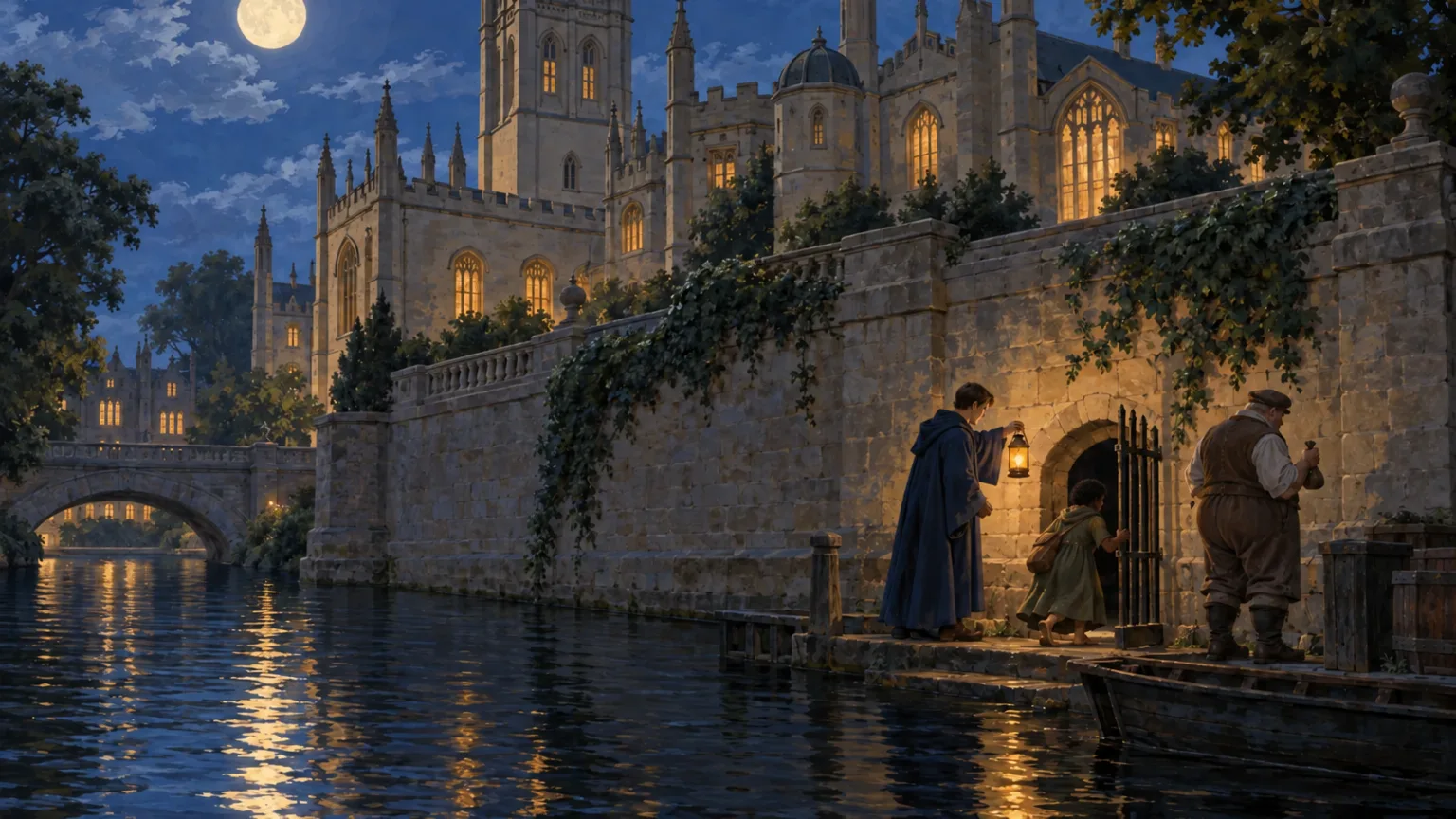
The GM has a few lines on the ledger and nothing else. That's enough: Swerdeston wants it gone, the university keeps it in the library, and the porter at the water gate takes bribes. The warehouse prep goes in the backlog, untouched.
At the end-of-session question, the players decide to lie low for a couple of weeks, then sell the ledger to Wesenham. The GM moves the houses first. The porter talks, so Swerdeston hires thief-takers to find out who came through the water gate. The fen holds this session, because Bawsey is waiting for his riders. And the priest rumor hasn't come up in two sessions, so the GM takes it off the quay. Sir Walter doesn't wait for the party: with nobody to protect him, he hides in a Swerdeston almshouse, and the GM notes it as news for the dwarf's player whenever he goes looking.
Session 3
Session 3 picks up two weeks later, and the GM has prepped the meeting the players asked for. Alice Fincham, Wesenham's factor, wants the ledger as proof against Swerdeston, and she'll pay for it or take the price off the rogue's debt. The scene opens on the quay, where Swerdeston's thief-takers are asking bargemen about the water gate.
While the party lay low, the fen moved twice. Bawsey arrested the reeve, and the party heard about it from a barge crew. Then, short of time and money, he burned the reed beds. At the equinox, with nobody to help him, the reeve's nephew Wat reached the fen's edge before his cousin Joan and walked into the water in her place.
In the counting house, the smoke is visible from Fincham's window, and the deal changes. Wesenham buys the fen's eels and reeds, and a drained fen ends that trade. Fincham will take the ledger, and she'll forgive the rogue's debt outright if the party goes upriver and stops the drainage. Joan is waiting downstairs to guide them.
The party turned down guarding the drainage. Fincham is asking for the opposite, and her offer exists only because of what the fen did while they were away, so it's a new choice and not the old job by another road. The fen isn't drained yet, either. The steps made things worse without settling them, so what happens upriver is still up to the party.
Where Campaign Arks fits
Campaign Arks is a session-prep assistant for GMs, and it keeps a sandbox's moving parts as documents. Each house gets a Faction document for its goal and next steps, people like Sir Walter get NPC documents, and each clue gets a Secrets & Hooks document you mark revealed once the party finds it, so you can see what the players knew when they chose. Each session has a Session Log for what happened at the table. On Pro, Draft next session reads your recent session logs and prep and drafts the next session for you to edit, including prepped material play never reached, like that warehouse.
Prep your next session in Campaign Arks
Prep my next session · Free for one campaign, forever · No credit card
Frequently asked questions
What if my players don't want to choose where to go?
Some tables don't, and that's fine. On EN World, a GM who'd spent a long time pushing for player-driven play wrote that "I have been trying to force the player-driven thing for a long time and I think maybe that's done." One reply: "Some folks simply do not want to drive the game." Before you give up on it, try two fixes from a D&D Beyond thread on players who wait to be led. The first is to give them problems of their own rather than more options. Three dungeons they've heard of can wait, the answer says, "but if they've been robbed, threatened, promised a job, double crossed, and promised another job by at least three different NPCs, they'll need to make choices about whom to trust." The second is to "create a table culture where characters need to plan enough for the DM to know what to run next time." If that still doesn't take, give the party a patron with a job each session and keep the rest of the world moving around them.
Can I run a published adventure as a sandbox?
Some are built for it. Asked about future Greyhawk books at a press event, Wizards of the Coast's Chris Perkins said of the Greyhawk material in the 2024 Dungeon Master's Guide: "This is the sandbox, it's Greyhawk. Go off and run Greyhawk or Greyhawk-like campaigns with this if you wish." A linear adventure takes more work: keep its places and villains, drop the chapter order, and expect the party to reach some places above their level, which is where the warnings above come in.
Does a sandbox need a main villain?
It can have one, as long as the villain is a group with plans that move, and the party can reach it from more than one direction. A villain with steps toward a goal gives the campaign a natural ending without forcing one route to it. Plenty of sandboxes end with the central conflict settled and no boss fight at all.
Can a sandbox work with short sessions?
Yes, if the big choices land at the end of the session. One answer to a GM on RPG Stack Exchange running a sandbox in two hours a week puts it this way: you want decisions "such as about into which region to travel next, or whether to pick up a side quest" to happen at the end of the session, so "you'll have the time to prepare the results thereof in greater detail." If your players are reachable between games, settling the choice by message works too.